
Travel guide to Thailand, things to do and see in 2026
Simon Muller
Posted on January 20, 2026
What to do in Thailand: Golden Temples, Turquoise Islands, and Open-Air Food Culture
Thailand is a perfect balance between urban buzz, misty mountains, and surreal lagoons. Whether you are visiting for the first time or returning out of love for the country, this guide will help you build a smart itinerary, choose the right season, taste the best of local cuisine, and stay connected without the hassle. To manage your data, remember to stay connected in Thailand with an eSIM that installs in minutes and works in over 200 destinations, without the need for a QR code.
Understanding Thailand at a Glance
Thailand is best explored by themes and regions. In the center, Bangkok overflows with energy, street art, and floating markets. To the north, Chiang Mai and Chiang Rai offer thousand-year-old temples, mountains, and traditional villages. In the historic heart, Ayutthaya and Sukhothai tell the story of the Golden Age of Siam. To the south, dozens of islands create living postcards, featuring karst cliffs and powdery white sand. All of this exists under a tropical climate, with seasons that should be carefully considered to make the most of your activities.
Weather Tip: The dry season varies by coast. The Andaman Coast (Phuket, Krabi, Koh Lanta) is generally at its best from November to April, while the Gulf (Koh Samui, Koh Phangan, Koh Tao) is often more pleasant from January to August. Choose your beach based on the season rather than the other way around.
Bangkok, the City That Never Sleeps
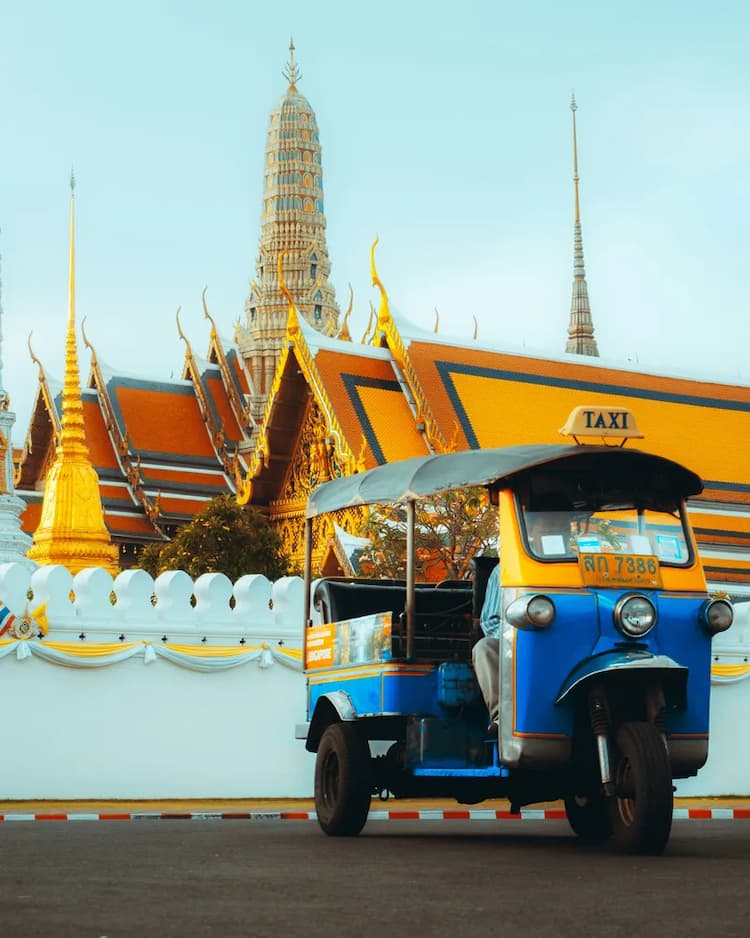
Bangkok captivates from dawn. Start with the Grand Palace and Wat Phra Kaew, home to the Emerald Buddha, then move on to Wat Pho and its monumental Reclining Buddha. Cross the Chao Phraya River to visit Wat Arun, which is sublime at sunset. The contrast is total with the creative districts of Charoenkrung, Talad Noi, and Chinatown, where galleries, designer cafes, and street food mingle with traditional workshops.
In the evening, head to a rooftop bar to see the city sparkle, then lose yourself in the night markets. Khao San Road remains a backpacker icon, but Ratchada Train Night Market and the markets of Wang Lang or Or Tor Kor are more authentic for tasting curries, spicy salads, skewers, and mango sticky rice.
Temple Etiquette: Cover your shoulders and knees, remove your shoes at the entrance of sanctuaries, and avoid pointing your feet toward Buddha statues. Keeping a small sarong in your bag can save many visits.
The North: Between Mountains and Culture
Chiang Mai, the cultural capital of the north, charms visitors with its ramparts, hundreds of temples, and creative scene. Climb up to Wat Phra That Doi Suthep for an aerial view of the city, explore the alleys of Old Chiang Mai, participate in a cooking or natural dye workshop, and book a traditional massage at the Lanna Folk Art Museum or near Warorot Market. Cafes and coworking spaces are flourishing here, making it ideal for longer stays.
Chiang Rai, smaller and quieter, is famous for Wat Rong Khun (the White Temple) and Wat Rong Suea Ten (the Blue Temple), which are fascinating contemporary works. By scooter or minivan, head toward Mae Salong and its tea plantations, or further toward the Golden Triangle at the confluence of the Mekong.
For a nature break, head to Pai, nestled in a lush valley. People come here for the slow pace of life, hot springs, the canyon at sunset, and waterfalls accessible by scooter. Families will enjoy the rice paddy accommodations, while digital nomads will love the slow-living vibe.
Smart Transport: Night trains between Bangkok and Chiang Mai are comfortable and affordable. Book early for a bottom berth. VIP buses are a good alternative if trains are full.
The Historic Center: Memory of the Kingdom
If there are two sites not to be missed, they are Ayutthaya and Sukhothai. Ayutthaya, 1.5 hours north of Bangkok, can be explored by bicycle among entwined roots and brick chedis, notably at Wat Mahathat where a Buddha’s face appears within a fig tree. Sukhothai, further away, offers particularly poetic ruins at sunrise, with reflecting ponds and lotuses. Both tell the story of the power of ancient kingdoms and perfectly complement the living temples of Bangkok and the north.
The Picture-Perfect South: Andaman or the Gulf?
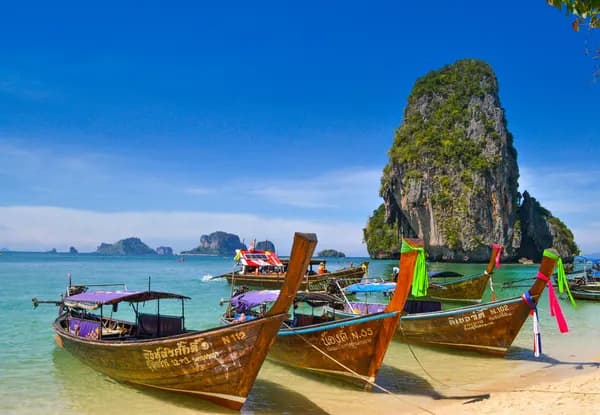
The south is an archipelago of different vibes. On the Andaman Sea side, Phuket is the main gateway, offering beaches, Sino-Portuguese cuisine in the Old Town, and sumptuous viewpoints. Further south, Krabi and the Railay Peninsula combine karst cliffs, rock climbing, and translucent lagoons. The Phi Phi Islands reveal surreal blue coves (visit early to avoid crowds). Koh Lanta charms with its gentleness, long beaches, and fishing villages. Further south still, Koh Lipe looks like a watercolor palette.
On the Gulf side, Koh Samui combines luxury beaches, family hotels, and coconut groves. Koh Phangan is famous for its Full Moon Party but maintains a very peaceful north, ideal for snorkeling. Koh Tao remains a classic for getting diving certifications and observing turtles and reef sharks. Depending on the season, alternate between kayaking in mangroves, snorkeling, boat trips, and hammock-side fruit sessions.
Sea and Islands: Respect the reefs by avoiding non-biodegradable sunscreen and never touching the coral. UV shirts and "reef-safe" creams are your best allies for impact-free snorkeling.
Must-Try Experiences
Street food is the soul of the country. Try a pad kra pao (holy basil stir-fry), a tom yum soup, khao soi in the north, and exotic fruits at the markets. Don't miss specialized stalls for som tam (papaya salad), satay skewers, and roti pancakes. For wellness, traditional massages and yoga classes can be booked everywhere, often at very reasonable prices. Floating markets near Bangkok (Damnoen Saduak, Amphawa) provide photogenic glimpses, though the most authentic experiences are often found in small neighborhood markets.
Nature lovers should head to the National Parks: Khao Sok for its karst mountains and Cheow Lan Lake, Erawan near Kanchanaburi for its terraced waterfalls, or Doi Inthanon for high-altitude hiking. History buffs can complete their trip with a visit to the Bridge over the River Kwai and the Death Railway.
Cooking Classes: Book a half-day session that includes a market visit. You will leave with simple recipes and grocery tips to use back home. Did you know that palm sugar or shrimp paste can radically transform a curry?
Best Season and Climate
Thailand is tropical, hot, and humid, with regional variations. The "cool" and dry season, between November and February, remains the most popular time to tour the entire country. The hot season, around March-April, can be intense in cities but superb in the mountains and by the sea if you are looking for the clearest waters. The monsoon arrives at different times depending on the coast, which is why it's useful to switch between the Andaman and the Gulf depending on your dates.
For major festivals, Songkran (mid-April) literally soaks the streets, while Loy Krathong and Yi Peng (in autumn, according to the lunar calendar) light up rivers and skies with lanterns, especially in Chiang Mai. Book well in advance for these periods.
Getting Around Easily
Domestic flights quickly connect Bangkok to major cities and islands. Trains are an experience in themselves, comfortable and punctual on main axes. Express buses and minivans fill the gaps for regional travel. In cities, Grab simplifies movement, as do the BTS and MRT in Bangkok to avoid traffic. On the islands, the scooter is king, but drive carefully—helmets are mandatory and an international driving permit is recommended.
Safety and Health: Tap water is generally not potable. Stick to sealed bottled water, protect yourself from mosquitoes and the sun, and travel with a basic first-aid kit. Check your insurance and official health recommendations before departure.
Staying Connected with GoMoWorld
When traveling, a reliable connection changes everything: navigation, payments, communicating with hosts, and last-minute reservations. With GoMoWorld, you install a single eSIM valid in over 200 destinations, then buy and activate data plans as needed directly in the app, without ever reinstalling the eSIM. Installation is done exclusively through the app (no QR code), and you choose when to start your plan—nothing activates automatically until you press "Start."
In Thailand, here are the available offers (prices/data as of your trip preparation):
- 30-day plan: 30GB for €29.99
- 30-day plan: 20GB for €19.99
- 30-day plan: 9GB for €10.99
- 7-day plan: 2GB for €3.99
The app guides you step-by-step. You can log in with the same email used on the website and benefit from a built-in VPN to secure your connections on hotel or cafe Wi-Fi. It’s simple, clear, and flexible.
GoMoWorld in Practice: Install the eSIM via the app before departure, then activate the plan upon arrival in Thailand. You will connect to local partner networks, hotspot sharing is allowed, and you can top up in one click if needed.
Budget and Good Habits
Thailand fits all budgets. You can travel very comfortably in the mid-range or aim for boutique hotels and beachfront villas. Street food remains unbeatable for eating well at low prices, while Bangkok’s fine-dining restaurants now rival those in major global capitals.
Withdraw money from ATMs if necessary, but prioritize contactless and online payments where possible. Keep cash for small stalls, markets, and local transport. For shopping, markets and designer boutiques offer crafts, textiles, ceramics, and contemporary decor. Negotiate with a smile where appropriate, and respect local craftsmanship.
Safe Street Food: Aim for busy stalls, observe product turnover, and don't hesitate to ask for a dish "not spicy" if you are a beginner. A small kit with hand sanitizer and wipes is always useful.
Essential Cultural Tips
Respect is key. A polite wai (greeting with palms joined) is always appreciated. Avoid sensitive topics, respect the monarchy and religious symbols, and dress appropriately in temples. Remove your shoes in private homes and some shops. A "khop khun krap/ka" (thank you, depending on your gender) and a smile go a long way.
Suggested Itinerary: 12 to 14 Days
Start in Bangkok for two to three days to get a feel for the city. Then head to Ayutthaya for a day trip or an overnight stay. Take the night train to Chiang Mai, explore its markets and temples, and save a day for Doi Suthep. Add a stop in Chiang Rai if time permits, or choose Pai for a nature vibe.
Finish in the South. If traveling between November and April, head to the Andaman Sea: Phuket, Krabi, Railay, and Koh Lanta. If traveling between May and September, opt for the Gulf: Koh Samui, Koh Phangan, Koh Tao. Book your ferries in advance and choose one island as a base to explore from.
For a longer trip, combine Thailand with other regional destinations. An urban escape to Singapore offers architectural and gastronomic shock. A jump to Malaysia opens doors to ancient forests and gems like Penang. If you want a nature-focused loop, consider extending to Vietnam. Finally, for a mix of tradition and hyper-modernity, an extension to Japan pairs well with a Zen ending.
Easy Extensions: The GoMoWorld eSIM remains the same from one country to another. No need to reinstall: just buy a plan for your next destination and activate it when you arrive.
Practical Pre-Departure Checklist
Check entry and visa requirements from official sources. Get travel insurance. Scan important documents and keep them online. If driving, bring an international permit. Pack temple-appropriate clothing (shoulders and knees covered) and mosquito/sun protection.
For connectivity, install the GoMoWorld app, create your account, install the eSIM, and leave it ready for activation. Upon landing, open the app and press "Start." Data begins, hotspots work, and the VPN protects you. Unactivated plans do not expire.
Why We Love Thailand
Because there is something for everyone. Families love the warm welcome and beaches; foodies love the vibrant cuisine; history buffs love the ancient capitals; and active travelers love the climbing, kayaking, and diving.
Thailand is best visited slowly—district by district, island by island. A coffee after a temple, a massage after a walk, or a rooftop drink after a market dinner. With a simple eSIM to manage your data, you keep your mind free to enjoy the journey.
Conclusion
Whether you are targeting the klongs of Bangkok, the mists of Chiang Mai, or the crystal waters of Koh Lanta, Thailand offers a clear thread of human warmth, diversity, and beauty. Keep your logistics light: a well-packed bag, an eSIM ready in your app, and a desire to be surprised. Thailand isn't just a place to "check off" a list; it’s a place to be lived and revisited.
Final Word: No stress—your eSIM is waiting in the app. Install it once, enjoy it everywhere, and travel with peace of mind. Safe travels!


Plans that might interest you




Similar articles

Hear from our Happy Travelers
4.7
App Store

4.7
Google Play Store

March 5, 2026
Trustworthy and cheap
A trustworthy and economic way of being in contact with home when travelling


February 27, 2026
Excellent esim
Easy to use. Used in many countries and will continue to use gomoworld


February 26, 2026
Best eSIM prices
Excellent price and good network coverage. Used it for my trips to Turkey and Russia, I faced no issues at all. Recommend!


February 10, 2026
Great eSIM service
I use their esim and I have used them all over India, Colombia, Nicaragua and the US and have not had problems with connection, except high in the mountains where no one has it.

February 7, 2026
Works flawlessly from 1st second
Installing and activating is straightforward, testing the system with a free trial in Switzerland worked fine Connection throughout the Gambia was perfect Renewal after expiration was easy, cheap and quick.


January 25, 2026
Really good data plans withs reasonable prices
GoMoWorld offered the best value out of all the options I considered. The app experience was also superior to other services I’ve tried. There was no ID verification requirement. Payment and setup was super easy. It guides you step by step how to install the eSIM and tells you the recommended settings. I would recommend to anyone looking for lots of data with really competitive prices.

What is an eSIM?
We’ll Explain Everything.
A simple, digital solution for staying connected wherever you Go.

Say Goodbye to Physical SIM Cards
No need to handle a physical SIM card (or risk losing yours)—everything is digital with an eSIM.

Quick and Easy Activation.
Download your GoMoWorld eSIM from our app and get connected in minutes. All our plans start at just €3.99, with no subscriptions or hidden fees.

Perfect for Travelers
Keep your regular SIM active for calls and texts while using GoMoWorld for data. You can have both your primary SIM and eSIM active simultaneously, or two eSIMs.


from
€3.99

Still thinking about it?
Download the app and enjoy a risk-free Trial. Experience GoMoWorld travel eSIM now!
