

Wifi en barco vs 4G: guía completa de conectividad

Simon Muller
Publicado el 25 de septiembre de 2026

Wifi en barco vs 4G: guía completa de conectividad
Sales a cubierta con ganas de revisar el correo. Tu teléfono muestra todas las barras de cobertura. Abres el navegador. No carga nada. Entonces te llega un mensaje de tu operador. Acabas de conectarte a la red satelital marítima del barco. ¿El coste? 5 $ por megabyte.
Tener internet en el agua es caro. Tienes dos opciones distintas: usar la red wifi del barco o confiar en los datos móviles 4G. La elección correcta depende por completo de lo lejos que estés de la costa.
Si cruzas el océano, el wifi satelital es tu único salvavidas. Si navegas cerca de la costa o vives en una barcaza de canal, el 4G LTE es más rápido y más barato. Decidir tu estrategia de conectividad empieza por nuestra guía completa de internet en cruceros y por entender cómo funcionan estas redes.
Contexto y qué está en juego
Las redes móviles necesitan antenas físicas. Estas antenas apuntan hacia el interior para dar servicio a las zonas pobladas. Cuando te alejas de la costa, la señal 4G se degrada rápidamente. La mayoría de los smartphones pierden la conexión móvil terrestre a unas 10 o 15 millas de la costa.
Cuando pierdes la señal de tierra, tu teléfono busca una alternativa. En los barcos grandes encuentra "Cellular at Sea". Es una red de roaming marítimo que funciona con satélites. Te permite usar el teléfono con normalidad, pero las tarifas son astronómicas. Tu operador habitual te factura directamente este uso. Subir una sola foto puede costar 15 $.
Para los propietarios de embarcaciones privadas, lo que está en juego es distinto. Las configuraciones de internet para nómadas digitales exigen conexiones estables y rápidas. Depender del wifi público de un puerto deportivo es frustrante. El ancho de banda se reparte entre cientos de usuarios. Las videollamadas se caen. Las descargas fallan.
Esto obliga a navegantes y pasajeros a trazar una estrategia. Tienes que controlar cuándo tu teléfono usa el 4G de tierra y cuándo usa el wifi del barco. Entender la diferencia entre layover y stopover te ayuda a planificar tus vuelos, y la misma lógica vale para los viajes por mar. Necesitas un plan concreto para tus días en alta mar y otro distinto para tus días en puerto.
Opciones disponibles
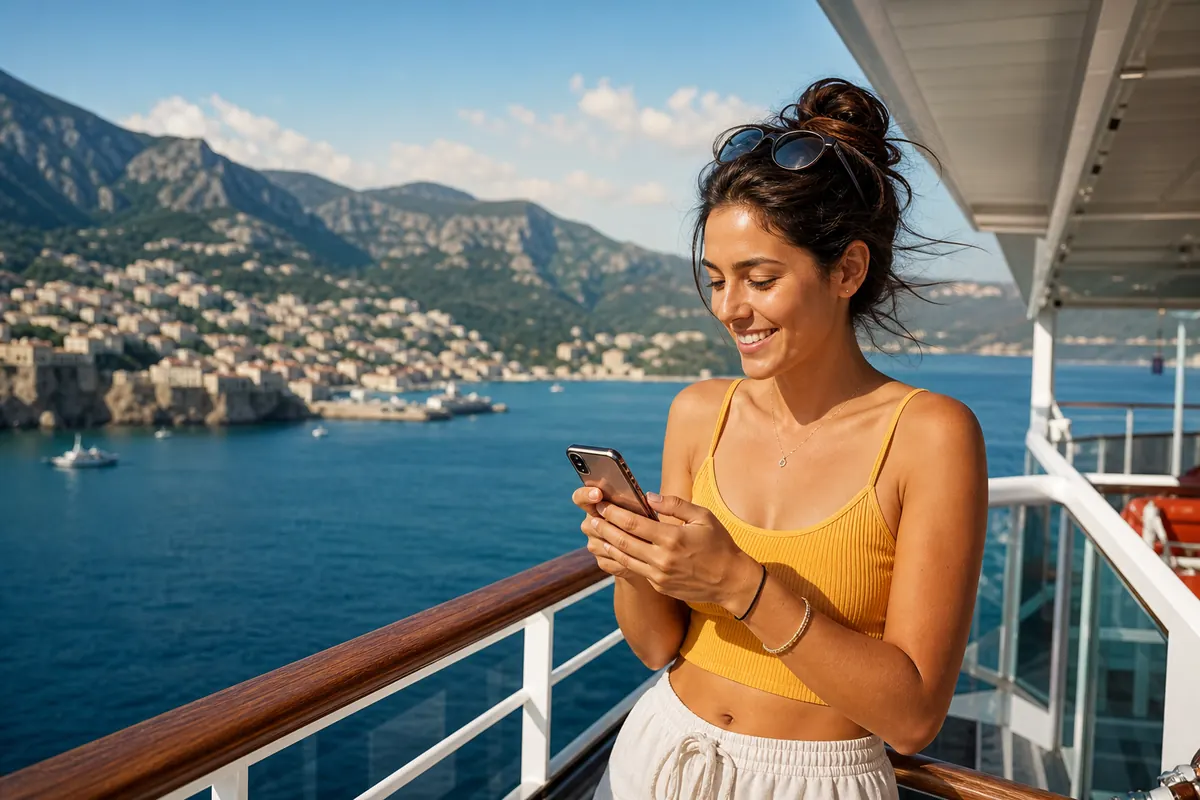
Tienes varias formas de mantenerte conectado a flote. Cada una tiene sus requisitos de equipo y su precio.
El wifi satelital del barco
Los grandes cruceros y los yates modernos usan internet por satélite. Distribuyen esta conexión por toda la embarcación mediante routers wifi.
- Ventajas: Funciona en cualquier parte del mundo, incluso en mitad del océano Pacífico.
- Inconvenientes: Es caro y lento. Las navieras suelen cobrar entre 20 y 30 $ al día por un solo dispositivo. Las velocidades rara vez superan los 5 Mbps.
Roaming marítimo (Cellular at Sea)
Ocurre cuando dejas activado el roaming en tu teléfono. El teléfono se conecta a la antena móvil interna del barco.
- Ventajas: No requiere ninguna configuración.
- Inconvenientes: Costes extremos. Los operadores cobran hasta 3 $ por minuto en llamadas y 5 $ por MB de datos. No uses nunca esta opción. Activa siempre el modo avión al salir del puerto.
Routers 4G/5G dedicados para barcos
Si tienes un yate o una barcaza de canal, puedes instalar un router marino dedicado. Sistemas como el 4G Connect Pro usan antenas MIMO externas montadas en el mástil.
- Ventajas: Estas antenas captan señales 4G débiles desde hasta 20 millas mar adentro. Crean una red wifi potente y privada en tu barco.
- Inconvenientes: Alto coste inicial. Un router 4G marino cuesta más de 800 $. Además, necesitas una tarjeta SIM local para evitar los cargos de roaming.
eSIM de viaje para navegar cerca de la costa
Cuando navegas cerca de la costa o atracas en un puerto, tu teléfono puede alcanzar las antenas locales 4G/5G. Usar tu operador habitual en el extranjero activa el roaming internacional. AT&T y Verizon cobran hasta 15 $ al día por ello. Una eSIM de viaje sustituye estas tarifas por un plan de datos local de prepago.
- Ventajas: Barata, rápida y segura. Pagas tarifas locales.
- Inconvenientes: Solo funciona a menos de 10 o 15 millas de la costa.
Tabla comparativa
Conocer los costes de antemano evita sorpresas en la factura. Así se comparan las principales opciones de conectividad en un viaje de 15 días.
| Opción de conectividad | Equipo necesario | Velocidad | Precio estimado |
|---|---|---|---|
| Wifi del crucero | Smartphone / Portátil | Lenta (1-5 Mbps) | ~20 - 30 $ / día |
| Roaming marítimo | Smartphone | Muy lenta | Hasta 5 $ / MB |
| Router 4G marino | Router + antenas | Rápida (4G/5G) | 800 $ de equipo + plan de datos |
| Roaming de AT&T / Verizon | Smartphone | Rápida (4G/5G) | ~15 $ / día |
| eSIM de GoMoWorld | App en el smartphone | Rápida (4G/5G) | 10,99 € por 15 días |
Nota: el volumen de datos de GoMoWorld varía según el destino. El precio es fijo.
Nuestra recomendación
Tu estrategia de conectividad debe adaptarse a dónde estés. Cuando estés lejos, en alta mar, pon el teléfono en modo avión. Activa el wifi y compra el paquete de internet del barco si necesitas trabajar.
Cuando te acerques a tierra, la estrategia cambia. No hace falta pagar 30 $ al día por el wifi del barco cuando tienes antenas 4G locales al alcance. Ahí es donde una eSIM multidestino se convierte en tu mejor herramienta.
Si planeas un viaje largo, controlar los costes de conectividad es tan importante como calcular tu presupuesto de coste de la vida en Tailandia. Cada dólar gastado en roaming es un dólar tirado.
Te recomendamos descargar la app de GoMoWorld antes de tu viaje. GoMoWorld ofrece una eSIM solo de datos que te conecta a las redes locales en cuanto llegas a la costa.
Todo el proceso se hace desde la app. No necesitas escanear ningún código QR. Descargas la app, eliges tu destino e instalas la eSIM directamente.
Los planes no caducan hasta que los activas. Puedes comprar tu plan con semanas de antelación. Cuando el barco se acerque al puerto, abre la app y pulsa "Iniciar". Tu plan de datos se activa al instante. Esta activación manual garantiza que nunca desperdicies un día de tu plan mientras estás atrapado en alta mar.
Cuando necesites consultar las formalidades aduaneras durante una escala en un país nuevo, lo quieres al instante. No quieres malgastar tu limitado tiempo en tierra buscando una cafetería con wifi público. Con GoMoWorld, bajas del barco con acceso completo a 4G/5G.
Los precios son estrictamente de prepago y transparentes. Tienes un volumen de datos concreto según el país de destino, con tres duraciones fijas:
- 7 días por 3,99 € (p. ej., 3 GB)
- 15 días por 10,99 € (p. ej., 10 GB)
- 30 días por 19,99 € (p. ej., 25 GB)
No hay cargos por exceso de consumo. Cuando te quedas sin datos, la conexión se detiene. Solo tienes que comprar otro plan en la app. Como GoMoWorld es un servicio solo de datos, mantienes activo tu número de teléfono habitual para llamadas y mensajes por wifi.
Esta configuración es perfecta para internet en viajes de larga duración. Todos los planes de GoMoWorld incluyen hotspot. Puedes conectar tu portátil a la conexión 4G de tu teléfono y trabajar desde la cubierta mientras estás atracado. Incluso conseguir internet durante una escala en China es sencillo, porque la eSIM canaliza tu tráfico de forma segura.
Deja de pagar tarifas diarias de wifi cuando el barco está parado. Usa las redes 4G locales. Mantén tus dispositivos conectados, comparte tu conexión por hotspot y esquiva por completo las trampas del roaming marítimo. Consigue hoy tu eSIM de GoMoWorld →
Preguntas frecuentes
¿Cómo tener internet en un barco?
Puedes usar la red wifi satelital del barco, instalar un router 4G marino dedicado con antenas externas o usar los datos móviles de tu smartphone. Los datos móviles solo funcionan cuando estás a menos de 10 o 15 millas de la costa. Para navegar mar adentro, hace falta satélite.
¿Es mejor el 4G o el 5G para los barcos?
El 5G ofrece velocidades mucho más altas, pero tiene menos alcance que el 4G. Cuando estás atracado o navegas muy cerca de la costa, una conexión 5G da velocidades de fibra. A medida que te alejas mar adentro, tus dispositivos pasarán de forma natural a 4G, que llega más lejos sobre aguas abiertas.
¿Puedo usar mis datos móviles en un crucero?
Sí, pero solo cerca de tierra. Si dejas los datos móviles activados en alta mar, tu teléfono se conectará a la red de roaming marítimo del barco. Eso se traduce en cargos enormes de tu operador habitual. Usa siempre el modo avión en el mar y activa una eSIM de GoMoWorld para los días de puerto.
¿Necesito un router especial para el wifi en barco?
Si tienes un barco y vives a bordo, un router 4G marino con antenas MIMO mejora mucho tu señal. Si eres pasajero de un crucero, no necesitas ningún router. Solo necesitas una buena eSIM de viaje para conectarte a las redes locales durante tus escalas en puerto.


Artículos similares

Coste De La Vida En Tailandia — internet y conectividad
Diferencia entre layover y stopover: guía completa de la conectividad

Escala en la aduana: ¿cómo tener internet en pocas horas?

Escala en China: ¿cómo tener internet en pocas horas?

Opiniones de nuestros viajeros
4.7
App Store

4.7
Google Play Store

5 de marzo de 2026
Fiable y económica
Solución fiable y económica para mantenerte conectado en tus viajes


27 de febrero de 2026
Excelente eSIM
Muy fácil de usar. La probé en varios países y sin duda seguiré usando GoMoWorld


26 de febrero de 2026
Las mejores tarifas de eSIM
Precio inmejorable y excelente cobertura de red. La usé en Turquía y Rusia sin ningún problema. ¡La recomiendo totalmente!


10 de febrero de 2026
Excelente servicio de eSIM
Uso su eSIM en muchos países: India, Colombia, Nicaragua, Estados Unidos... Sin problemas de conexión, salvo en alta montaña, donde de todas formas no hay cobertura de nadie.

7 de febrero de 2026
Funciona perfectamente desde el primer segundo
La instalación y la activación son sencillas. La prueba gratuita en Suiza funcionó genial. Conexión perfecta en toda Gambia. La renovación al caducar fue fácil, barata y rápida.


25 de enero de 2026
Excelentes planes de datos a precios competitivos
GoMoWorld ofrece la mejor relación calidad-precio de todas las opciones que he comparado. La experiencia en la app también es mucho mejor que en otros servicios que probé. No piden ninguna verificación de identidad. El pago y la instalación son súper sencillos. La app te guía paso a paso para instalar la eSIM y te recomienda los ajustes correctos. La recomiendo totalmente a quien busque muchos datos a precios realmente atractivos.

¿Qué es una eSIM?
Te lo Contamos Todo.
Una solución digital sencilla para estar conectado vayas donde vayas.

Di adiós a las tarjetas SIM físicas
Se acabó manejar una tarjeta SIM física (o arriesgarte a perderla): con una eSIM todo es digital.

Activación rápida y sencilla
Descarga tu eSIM de GoMoWorld desde la app y conéctate en pocos minutos. Todos nuestros planes empiezan desde solo 3,99 €, sin suscripción ni cargos ocultos.

Ideal para viajeros
Mantén tu SIM habitual activa para tus llamadas y SMS mientras usas GoMoWorld para tus datos. Puedes tener tu SIM principal y tu eSIM activas al mismo tiempo, o incluso dos eSIM.


desde
3,99 €

¿Aún lo estás pensando?
Descarga la app y prueba GoMoWorld sin riesgo con nuestra prueba gratuita. La aventura empieza aquí.